501(C)(3) · ECONOMIC MOBILITY & COMMUNITY BENEFITS
Small businesses are civic infrastructure. We fund them to act like it.
Enterpact backs social entrepreneurs — small business owners in underserved communities — through a cohort-based learning model, shared resources, and impact grants — so that financial stability and community impact co-exist in the same business.

THE NEED FOR THIS WORK
Half of them will not be here in five years. When a small business closes, a neighborhood loses jobs, tax base, and the place where community gathers. Most of these closures are not caused by bad ideas — they are caused by outdated systems for small businesses, missing skills, and a dramatically changing economic environment. Those are areas our programs touch, creating economic stability, collective action and direct impact in communities.
If your favorite local business closed tomorrow, what would be lost?
+40%
of US GDP is delivered by small business 1-20 employees ~400K
economic opportunity lost locally per business that fails
"local multiplier" — typically runs 3 to 7, meaning each dollar spent locally generates an additional $2 to $6 of economic activity in the community.
3X
return
2-7T
in potential earnings missed nationally
When a business closes, the loss is not only economic.
Local small businesses are crumbling at a staggering rate because they operate within outdated economic systems. the uncertainty in our current environment prevents long-term stability. As a result, local communities suffer.
Quality of life, access to goods and services, and economic opportunities decline across key social determinants of health, including employment, wages, education, and health. The secondary affects land on the local of built environment, social connection and safety.
“Small businesses are the lifeblood of healthy and vibrant communities. It’s time for a 21st century framework where both financial success and positive community impact co-exist.”
DEEPAK DOSHI — FOUNDER & CEO
WHERE ONE FUNDED BUSINESS SHOWS UP
Employment & Wealth Creation
Small businesses create jobs first and wealth second — livable wages that turn into savings, equity, and generational assets that stay local.
Built environment & Safety
Occupied storefronts, safer streets, and fewer vacant blocks - activating third spaces for the neighborhood.
Access to goods
Quality food, care, repair and services within walking distance of home.
Social connection
The places where a neighborhood gathers, which is health by another name.- Community & Belonging
Civic Collaboration
Nonprofits, businesses, city, and faith communities working the same problem from different seats — impact multiplies when sectors move together.
Agency
Communities shaping their own outcomes, not waiting to be shaped by them — ownership over what gets built and who benefits.
Cultural Architects
Small businesses hold a neighborhood's identity in plain sight — the corner store, the barbershop, the coffeehouse that makes a place recognizably itself.
Education
Learning moves in both directions — entrepreneurs sharpen their craft while community members build skills in health, finance, and law through hands-on community programming.
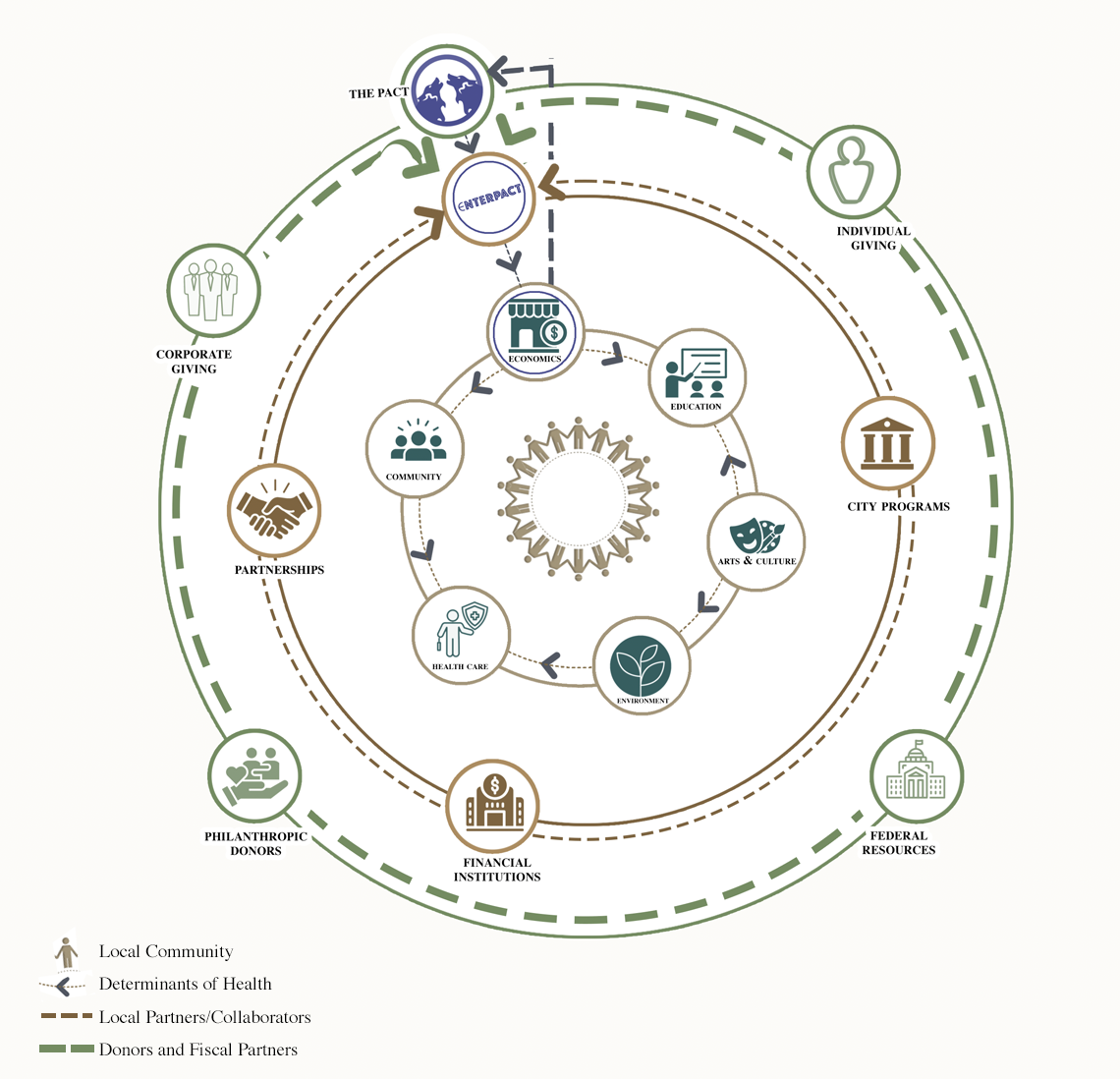
interconnected by design
LOCAL ECONOMIC IMPACT BY THE NUMBERS
76%
of all US firms are placed based small businessesfail within five years, with failure rates rising after ten50%
source — SBA.gov
THE MULTIPLIER
A dollar into one small business does not stop at that business.
A dollar into one small business does not stop at that business. Our services are not three separate offers — grants, cohort learning, and ongoing support compound on each other, and what they compound into is economic vitality within communities, which is measured, in public health terms, as a social determinant of health.
Employment, wages, education, and access to goods and services all move when a neighborhood's businesses stay open. That is the same list a hospital or health department uses to explain why one zip code lives longer than the next.
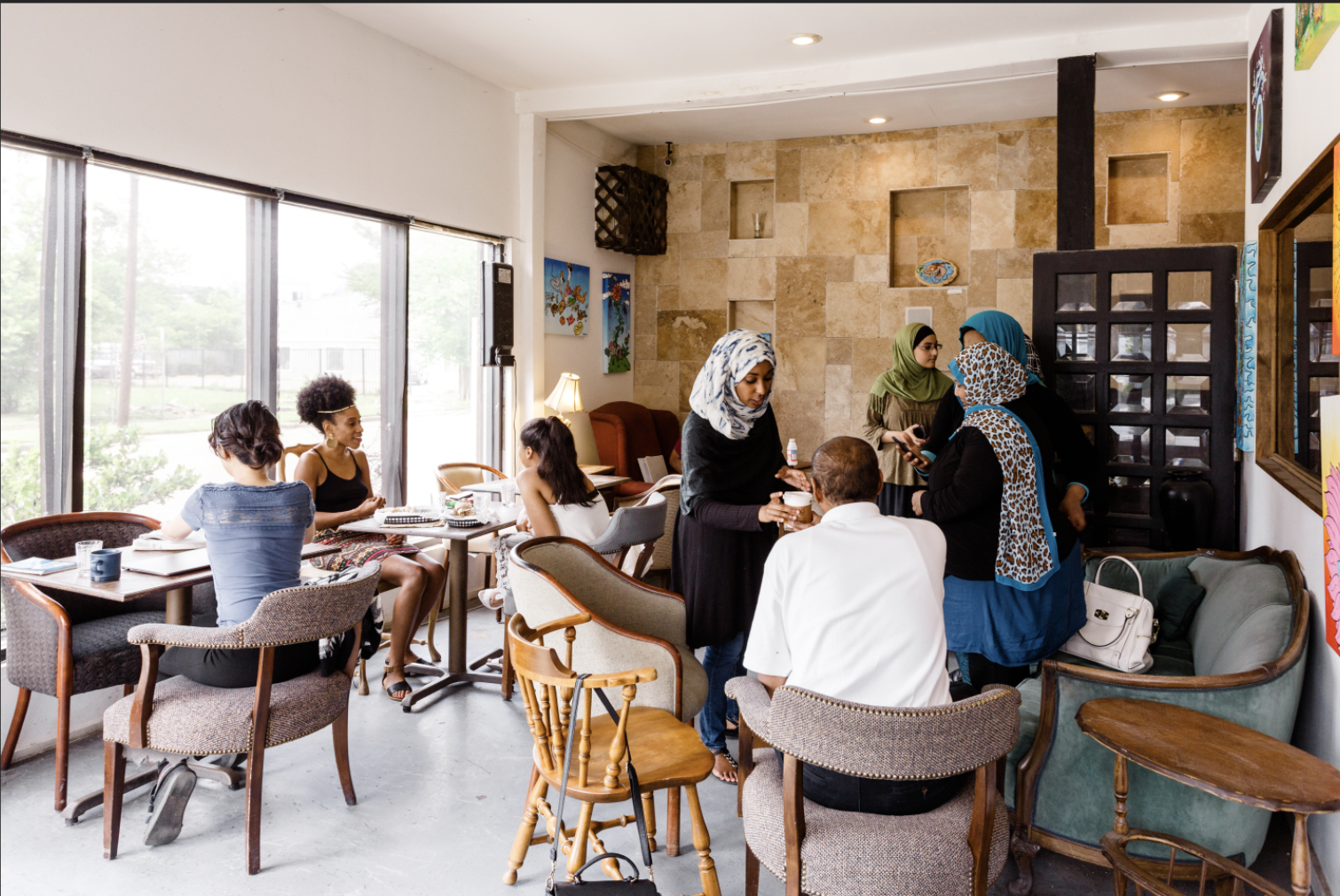
Small businesses are also architects of the cultural fabric of a community. A coffeehouse, a barbershop, a corner store — these are third places: sites outside home and work where people build the social ties that hold a neighborhood together. Public health researchers now classify third places as social infrastructure in their own right, on par with employment and access to care as a determinant of health. Their closure is linked in the research to measurable declines in community wellbeing. That is what is at stake beyond the balance sheet: not just an economic actor, but a place where belonging happened.
theory of change
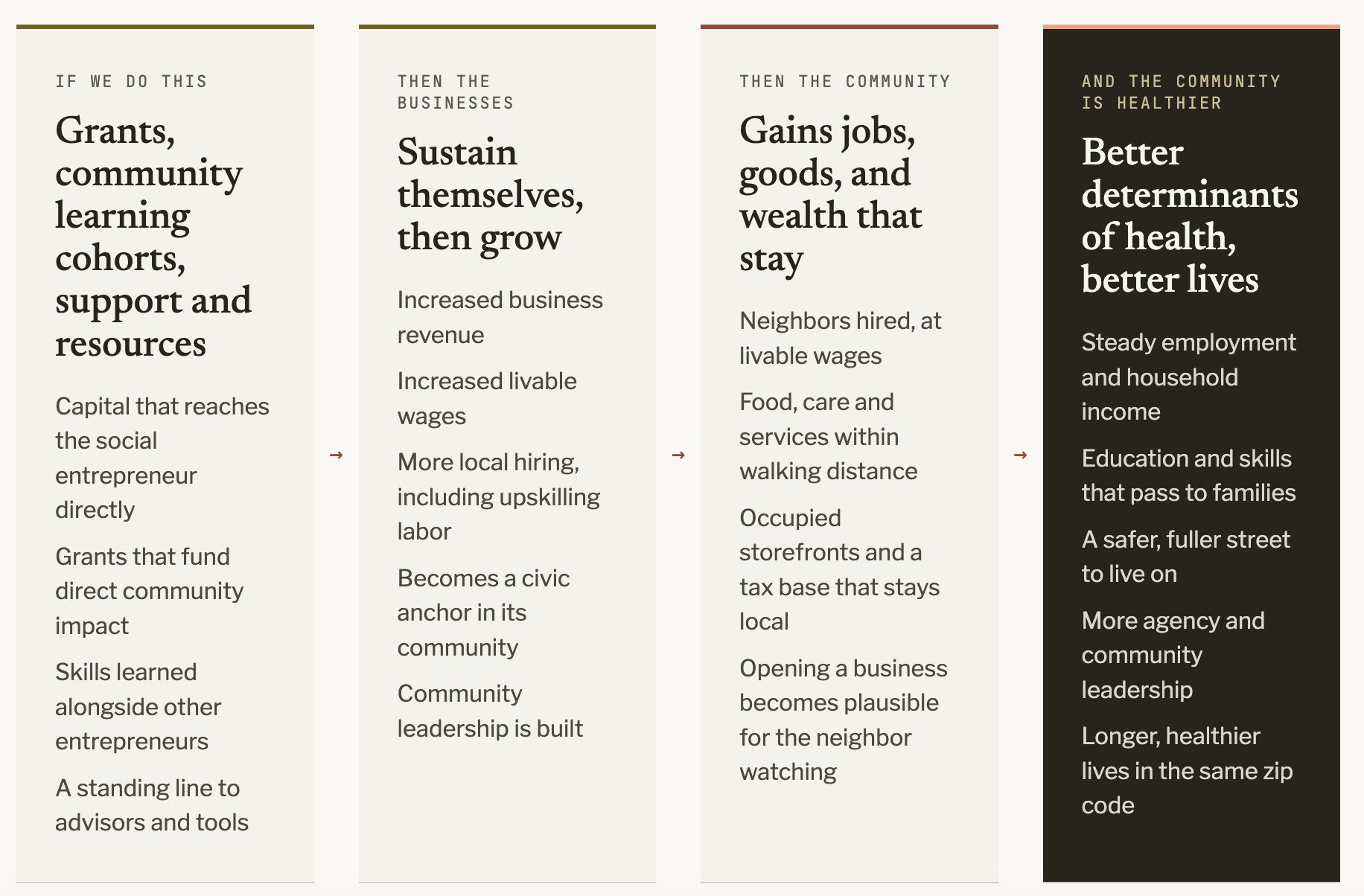
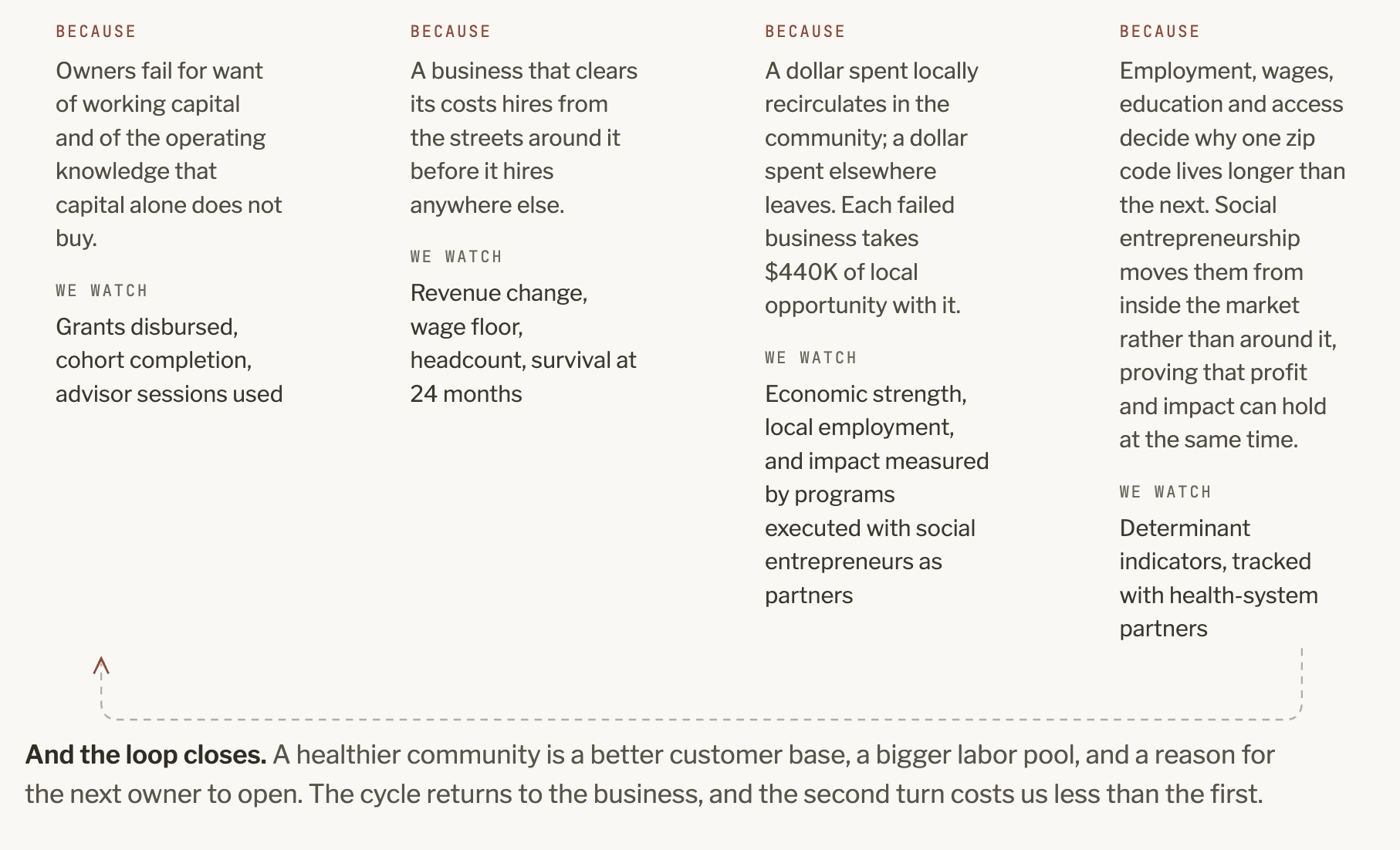
If an owner gets capital and capability together, the community around them gets healthier.
the model we empower
SOCIAL ENTREPRENEURSHIP
NOUN
Social enterprise
A business where financial stability and positive community impact co-exist. Not a charity with a storefront, and not a company that donates at year end — one operation, two returns.
NOUN
Social entrepreneur
The owner who runs it that way. Someone who treats their business as an instrument for their community, and their community as the reason the business lasts.
WHAT THE WORK MOVES — OUR FIVE PILLARS

Innovation
New models for old problems — entrepreneurs test what works, and communities gain solutions built for them, not around them.
Education
Learning moves in both directions — entrepreneurs sharpen their craft while community members build skills in health, finance, and law through hands-on community programming.


Environment
Sustainable practice protects the place a business calls home — and prepares it for what's next, through disaster recovery and resiliency planning that keeps communities standing after the storm.
Economic vitality
Every dollar earned recirculates — wages, vendors, reinvestment — building wealth that compounds locally

Collective action
Impact multiplies when sectors move together — nonprofits, for-profits, corporations, churches, city and federal government aligned around shared community benefit, not siloed efforts.
TAKE ACTION
Three ways in, depending on who you are.
The pilot is being assembled now. Everything below reaches a person, not a queue.
You've carried this far enough alone. Time to plug into something bigger.
FOR BUSINESSES
If you run a small business in an underserved community and you want it to do more than survive — hire locally, run a program, open your doors to the block — you are already operating as a social entrepreneur. Enterpact funds that work and teaches the skills it takes to sustain it.
Six Houston communities · 40 places in the pilot
I OWN A SMALL BUSINESS
Join the interest list
Applications are not open yet. Leave your details and you will be first to hear when the next cohort opens — no application, no attachments.
FOR PARTNERS
A short line from your dollar to a business in the community
We work with foundations, corporate community-investment teams, CDFIs, chambers, and civic institutions that want small business support with a reporting trail.
Most economic mobility funding passes through several layers before it reaches anyone who serves a neighborhood directly. Ours reaches an owner, and the owner is already there.
I CAN FUND OR PARTNER
Thirty minutes with Deepak. Not a pitch — a conversation about what you're trying to solve and whether we're the right fit to solve it together.
Book a partnership call
01
The Problem
what are we solving for?
02
The Fit
Whether our model matches how your capital is meant to move?
03
The Path
what a pilot, partnership, or trial could realistically look like?
Or write to enterpact@doshihouse.com
The shop that reflects your neighborhood’s identity. The place that celebrated your milestones. Nominations are how we find the owners we fund — it takes two minutes and costs nothing.
We contact every nominated business within two weeks and invite them to apply. You will hear from us when they do.
Name the place that makes your neighborhood feel like yours.
FOR EVERYONE
I LIVE HERE AND I CARE
Nominate, pledge, or give
You do not need capital to move this. Naming a business takes two minutes, and nominations are how we find most of the owners we fund
Get involved
Pledge to buy from the pact
Enterpact is a 501(c)(3).
Gifts fund grants, cohort delivery, and measurement.
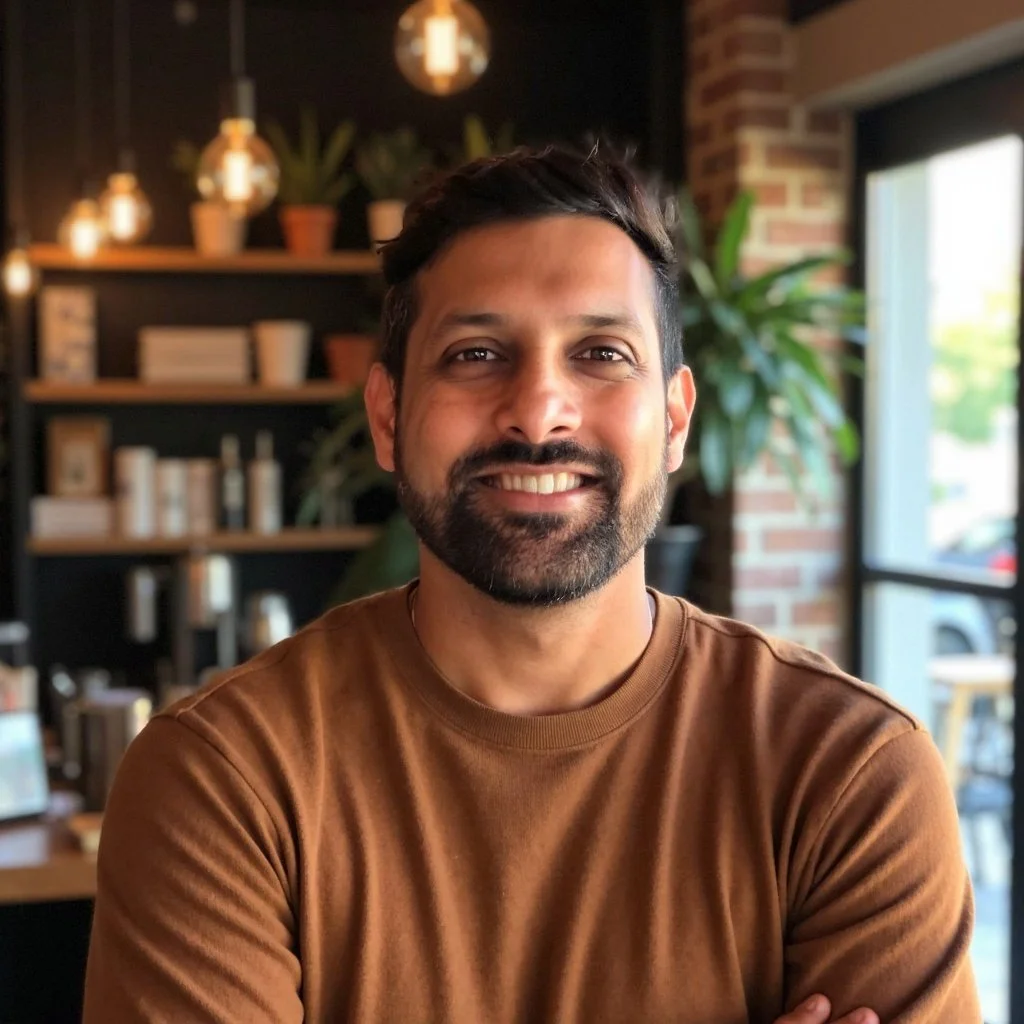
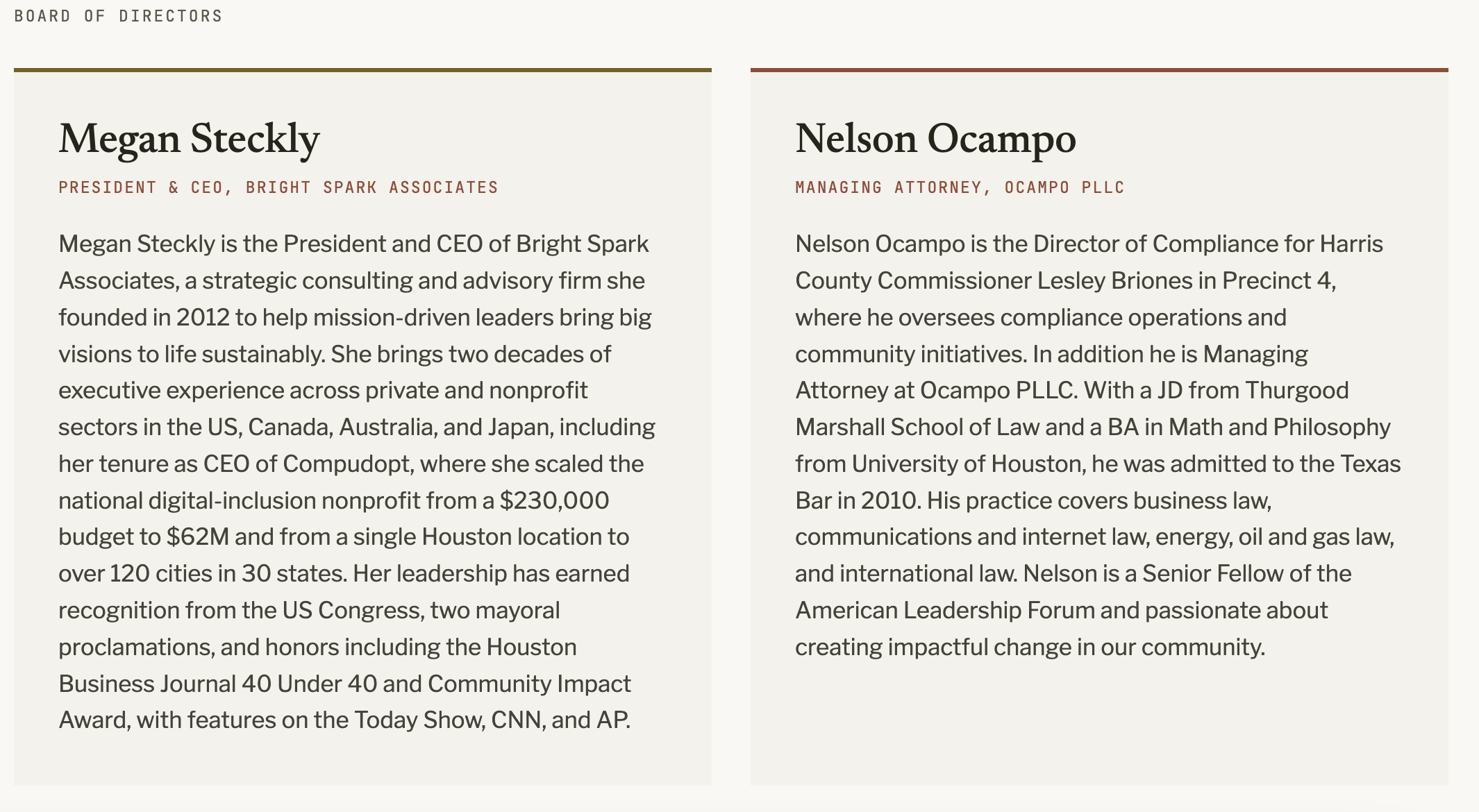
Deepak Doshi
FOUNDER & CEO
Deepak Doshi is a Houston-based entrepreneur and social enterprise leader who founded Doshi House, a coffeehouse built on a double-bottom-line model of profit and community impact, and has since served on Project Row Houses’ Board of Directors since 2011 while helping lead revitalization efforts in Third Ward.
His work has earned national recognition, including selection for the Goldman Sachs 10,000 Small Businesses Program, the American Leadership Forum, Harvard Business School’s Upswell Program, and the Wells Fargo Small Business Grant Grand Prize. Drawing on over a decade of entrepreneurial experience, Deepak founded Enterpact to build a sustainable, community-centered ecosystem for small businesses.